Crokinole – How to Play Like a Pro
Crokinole — How to Play Like a Pro
Want to hit more 20s, control the center, and close out tight ends with confidence? This quick, streamlined guide covers the rules, techniques, strategy, and practice routines you need to improve right at the crokinole board.
The Original Workshop • Updated for readability and quick learning.
Why People Love Crokinole
Crokinole blends billiards-like precision with the pace of a dexterity game. Every flick gives instant feedback, so small improvements add up fast. It’s social and easy to learn, yet rewards focus and calm under pressure—great for both family game night and local tournaments.
A Very Short History
Most sources trace crokinole to late-19th-century Canada, where round wooden boards were built for parlor play. The modern design—concentric rings, a center “20” cup, and pegs—balances offense and defense, rewarding finesse over force. See Crokinole on Wikipedia for background.
Board Anatomy & Setup
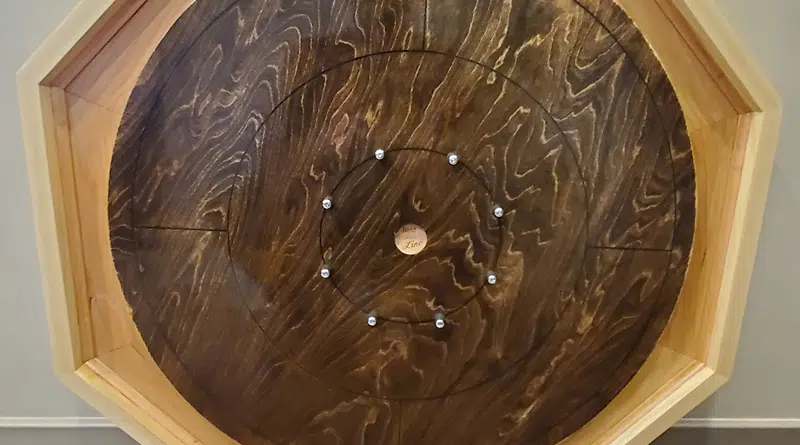
- Surface: 26″–30″ smooth diameter for consistent glide.
- Rings: 5, 10, 15 points, plus a 20-point center cup.
- Pegs: Posts around the inner ring add tactical angles.
- Shooting line: Start your disc on/behind your quadrant line.
- Gutter: Missed discs fall here and score zero.
Discs: Two colors. Singles use 12 each; doubles share 12 per team. Maple or hardwood discs with beveled edges release cleanly.
Rules & Scoring (Quick)
- Players: Two (singles) or four (doubles, partners opposite).
- Turns: Alternate flicks one at a time.
- Legal start: Disc must start on/behind your quadrant line.
- Contact rule: If any opponent disc is on the board, your shot must touch one of them.
- 20s: A clean 20 goes straight to your tray for safe points.
- Fouls: Missed contact, illegal start, or disc off board—remove your shooter and any of your discs it touched.
- Scoring: After all discs are played, remove 20s and total rings (15/10/5). Higher side scores the difference.
Scoring Rings at a Glance
| Zone | Points | Notes |
|---|---|---|
| Center Cup | 20 | Remove immediately to tray |
| Inner Ring | 15 | Inside pegs |
| Middle Ring | 10 | |
| Outer Ring | 5 |
Shooting Technique
1. Stance & Anchor
- Keep shoulders square; many players sit for steadiness.
- Anchor non-shooting hand lightly on board edge.
- Keep eyes over aim line; side view distorts angles.
- Exhale gently before flicking to relax wrist and fingers.
2. Grip & Release
- Middle finger (sometimes with index) gives control.
- Light touch—too much pressure causes sticking.
- Drive straight through line; follow through past disc.
- File nails smooth to avoid snags.
3. Speed Control
- Start with slower shots; add speed once consistent.
- Practice parking inside 15 or on 10 without touching pegs.
- Each board feels different—test glide before matches.
Winning Strategy
- Openers: With a clear board, attempt a 20. If pegs crowd center, park slightly off-center in 15 to clog lanes.
- Removals: Take out dangerous discs that set up easy 20s for your opponent.
- Center control: Occupy 15 to narrow lanes and create guards with pegs.
- Leading: Defend the center with low-risk removals.
Trailing: Increase risk and hunt 20s to swing the end.
Shot-Selection Examples
1. Clear Board
Play: Attempt a 20. Why: Highest-value opener that builds momentum.
2. Opponent on the 10
Play: Brush contact through pegs and finish scoring. Why: Removes threat and keeps you alive.
3. Trailing by 15
Play: Attempt a 20 or set one up with a removal. Why: High variance needed when behind.
Practice Drills (4-Week Plan)
 Short, focused sessions build skill faster than long unfocused play.
Week 1: Basics
- 20s Ladder: Consecutive 20s; record streak and %.
- Quadrant Lines: From each quadrant, hit inner ring cleanly.
- Soft Stops: Park gently on the 10.
Week 2: Contact & Freeze
- Make legal contact then finish scoring.
- Practice freezing to opponent discs on 10/15.
- Simulate last-shot pressure with a timer.
Week 3: Removals & Peg Control
- Remove targets and stick for points.
- Use peg brushes to redirect into scoring zones.
Week 4: Pressure
- 20-second shot clock drills.
- Simulate being up/down in score to choose best EV shot.
- Play mock match focusing on breathing routine.
Download Printable Quick Reference PDF
Equipment & Care
Boards: Smooth, stable, evenly pegged. 28–30″ offers room for advanced play.
Discs: Hardwood discs with clean bevels; keep a spare set.
Care: Dust before play; light carnauba wax only. Avoid silicone or excess wax.
Storage: Keep in a dry, stable environment; store vertically in a padded case.
Contact us for handcrafted boards.
Etiquette
- Stay still while others shoot.
- Call your own fouls; respect close calls.
- Keep hands clean; protect the surface.
- Reset pegs and discs properly each turn.
Tournament Mindset
- Warm up 10–15 minutes with 20s, removals, and peg stops.
- Between ends: reset, breathe, plan next opener.
- Stay hydrated and eat light snacks.
- Review local rules before the match.
Variants & House Rules
- Play to 100 or fixed ends.
- Add shot clocks for fast tournaments.
- Swap colors mid-match for fairness.
Troubleshooting
- Short of 20: You’re decelerating—snap through smoothly.
- Rim-outs: Line good, speed too high—reduce power 5–10%.
- Missed contact: Aim edge-to-edge; light brush counts.
- Peg hits: Read the curve; adjust wider.
- Jumping discs: Relax pressure; smooth nails.
Glossary
- 20: Disc in the center cup worth 20 points.
- Freeze: Stop touching an opponent disc.
- Stick: Remove and remain scoring.
- Brush: Light graze contact.
- Bank: Shot off rail to change angle.
- EV: Expected Value—risk vs. reward calculation.
Common Questions
Do I always have to hit an opponent’s disc?
Only when they have one on the board. A light brush counts; if clear, aim freely for the 20 or rings.
What happens when I score a 20?
Remove it to your tray immediately. It can’t be knocked out and often decides the end.
How is an end scored?
After all discs are played, remove 20s and total rings (15/10/5). The higher side scores the difference.
Is it better to sit or stand?
Most sit for stability and level sightline. Standing can work if you anchor and keep motion minimal.
What board finish is best?
Smooth, consistent, non-silicone finish. Avoid heavy wax; calibrate speed with warm-up shots.
How do I practice efficiently?
Short, focused drills. Track 20%, take-out-and-stick rate, and foul rate.
Ready to Level Up?
Share this guide, schedule a practice night, and explore handcrafted boards and accessories. Contact us to design your custom crokinole board today.
Further reading: Crokinole (Wikipedia)